A fun foamy reaction experiment where yeast breaks down hydrogen peroxide to create a massive “toothpaste” eruption. Safe for kids when using 3% hydrogen peroxide
Difficulty Level: Easy
Concepts: Chemical Reactions
Materials List
- Hydrogen peroxide (3% – safe, household grade)
- 1 packet dry yeast (or 1 tablespoon)
- Warm water (to activate the yeast)
- Liquid dish soap
- Food colors
- A plastic bottle or tall container
- Tray to contain the foam
- Funnel (optional)
- Safety Glasses
Steps
- Place the bottle on a tray.
- Add ½ cup of 3% hydrogen peroxide into the bottle.
- Add a few drops of food coloring.
- Add 1–2 tablespoons of dish soap and gently swirl.
- In a separate cup, mix dry yeast with warm water to activate it.
- Quickly pour the yeast mixture into the bottle.
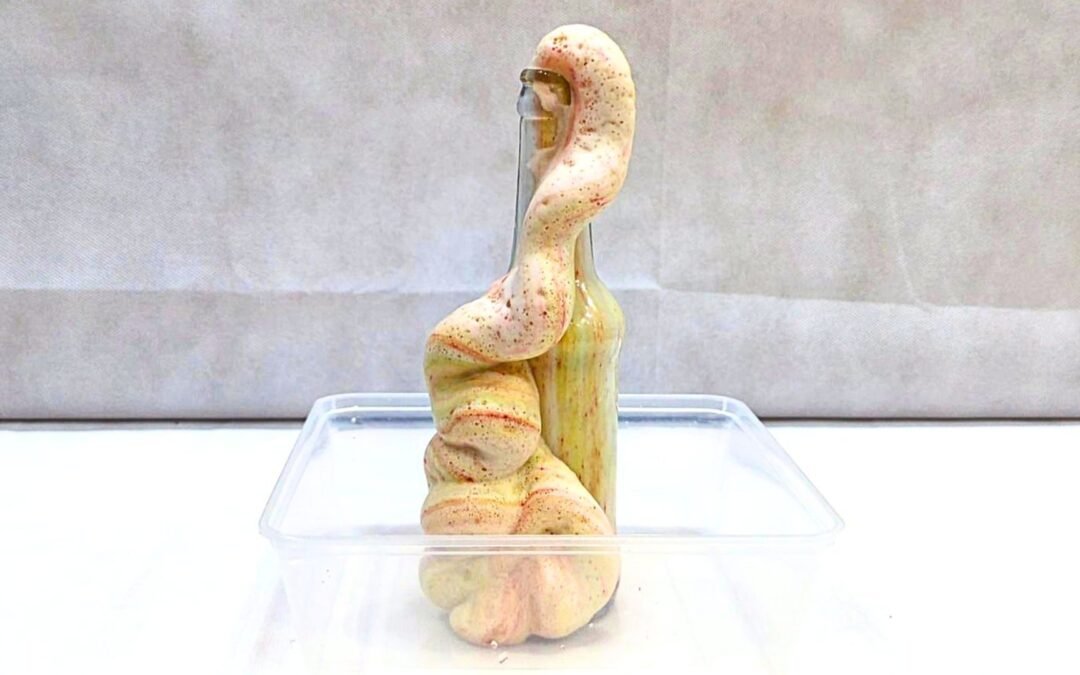
- Watch the thick, colorful foam push out like “elephant toothpaste”!
Science Behind It
Hydrogen peroxide naturally breaks down into oxygen + water, but yeast contains the enzyme catalase, which makes the reaction happen much faster.
2 H₂O₂ → 2 H₂O + O₂ (gas)
2 H₂O₂ → 2 H₂O + O₂ (gas)
- The oxygen gas gets trapped inside the dish soap.
- This creates a huge amount of foam, pushing upward like toothpaste for an elephant.
- The reaction feels warm because it is exothermic (releases heat).
Using 3% hydrogen peroxide makes it safe and kid-friendly.
Watch the video!
Keywords: elephant toothpaste experiment, yeast and hydrogen peroxide, safe elephant toothpaste for kids, 3 percent hydrogen peroxide experiment, catalase enzyme reaction, foam science project, kids chemistry experiment, warm water and yeast reaction, elephant toothpaste at home, STEM foam experiment, fun science for kids, dish soap hydrogen peroxide reaction