Build a working hydroelectric power generator using flowing water, a turbine, and a DC motor. This exciting STEM project demonstrates renewable energy, water pressure, turbine mechanics, and electricity generation through a mini dam simulator.
Difficulty Level: Medium to Advanced
Concepts: Renewable Energy, Energy Conversion, Hydropower, Hydroelectric Energy
Materials List
- Tall plastic container with lid
- RK-370 DC motor
- 2mm axle rod (about 4 inch)
- Hair dryer fan or plastic turbine fan
- Air compressor nozzle
- 1/2 inch flexible pipe
- Water bucket or water reservoir
- 5mm red LED
- 5V white LED
- Electrical wires
- Hot glue gun
- Tape or sealant
- Support stand for elevated water bucket
Steps
- Prepare the turbine chamber
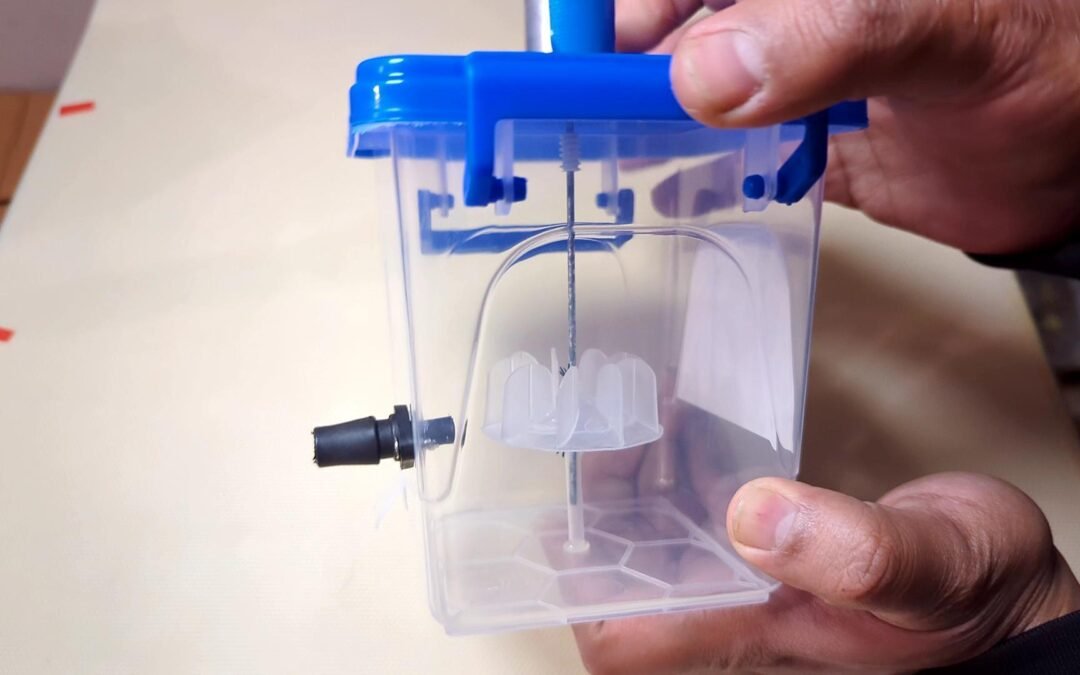
- Use the plastic container as the main turbine housing.
- Install the motor
- Fix the RK-370 motor upside down on the lid.
- Extend the motor shaft
- Attach the 2mm axle rod to the motor shaft so it reaches inside the container.
- Attach the turbine fan
- Fix the hair dryer fan onto the axle rod inside the container.
- Install the water nozzle
- Add the nozzle on the side of the container aimed toward the turbine blades.
- Connect the water supply
- Attach the pipe between the elevated water bucket and the nozzle.
- Connect the LED
- Wire the motor terminals to the LED.
- Test the system
- Release water from the bucket and observe the turbine spinning and the LED glowing. ⚡
- Increase the height
- Raise the bucket higher to increase water pressure and generate more electricity.
Science Behind It
This project demonstrates how hydroelectric power plants generate electricity using moving water.
Potential Energy of Water 🌊
Water stored at height contains:
- Gravitational Potential Energy
As water flows downward:
- Its speed increases
- The water gains kinetic energy
High-Speed Water Jet 💨
The nozzle narrows the water flow, increasing its speed and pressure.
This creates a stronger water jet that spins the turbine blades faster.
Turbine Rotation ⚙️
The flowing water hits the fan blades and rotates the axle.
This spinning motion turns the DC motor shaft.
Motor as a Generator ⚡
Normally, motors use electricity to spin.
In this project:
- Water spins the motor
- The motor generates electricity
This process is called:
- Electromagnetic Induction
More Height = More Power 💡
When the water bucket height increased:
- Water pressure increased
- Turbine speed increased
- More electricity was generated
This allowed:
- A red LED to glow at lower pressure
- A white LED to glow at higher pressure
This demonstrates how real hydroelectric dams generate more power with greater water pressure and flow.
Experiment Ideas 🧪
- Compare different water heights
- Test different turbine blade shapes
- Try larger nozzles vs smaller nozzles
- Measure voltage output with a multimeter
- Compare red LED vs white LED power requirements
Watch the video!
Keywords: hydroelectric generator project, DIY water turbine, hydro power STEM project, renewable energy experiment, water turbine generator model, dam simulator project, electricity from water, mini hydroelectric plant, STEM engineering project, homemade power generator