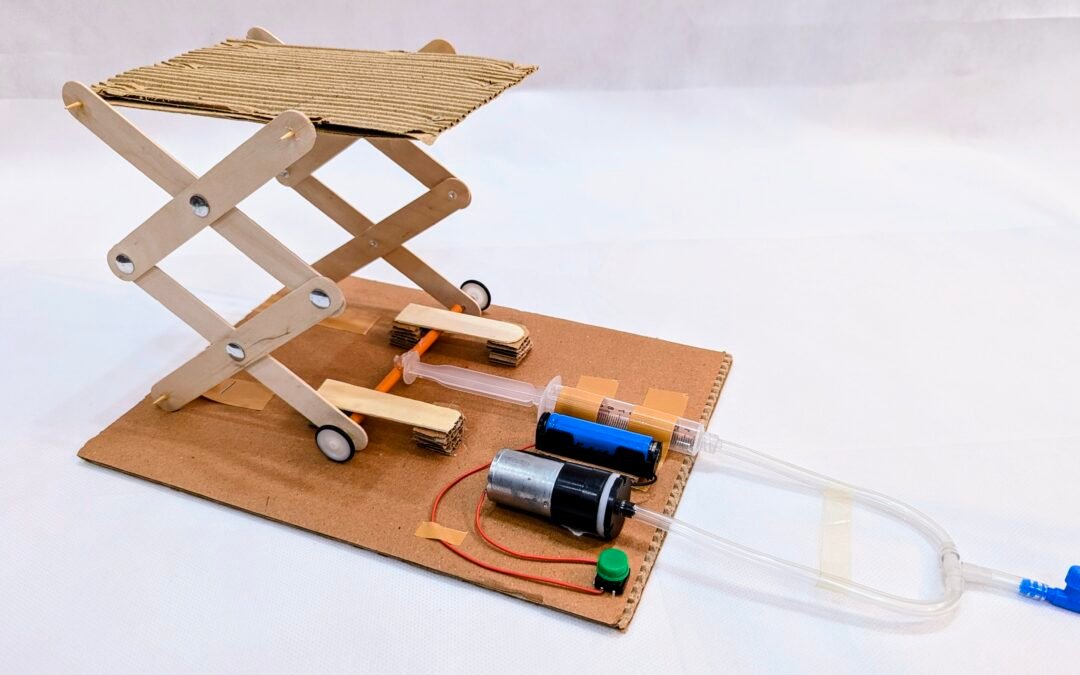
Convert a hydraulic lift into a pneumatic system using a mini air pump and discover how compressed air can transfer energy. This exciting STEM project helps kids understand pressure, air systems, and real-world machines powered by pneumatics.
Difficulty Level: Medium to Advanced
Concepts: Mechanical Engineering, Pneumatic Systems, Energy Transfer, Electronics
Materials List
- Cardboard base
- Tongue Depressors OR Large Ice cream sticks (for scissor mechanism)
- Paper fasteners or small nuts/bolts
- 1 syringe (as actuator)
- Plastic tubing
- Mini air pump (3–5V)
- Battery (or power supply for pump)
- Aquarium air valve (manual control)
- Glue (hot glue recommended with supervision)
- Stapler
- Tape
Steps
- Build the lift structure
- Create the same scissor lift using sticks and attach a top platform.
- Attach the syringe actuator
- Fix one syringe to the base and connect its plunger to the lift mechanism.
- Connect tubing
- Attach a plastic tube to the syringe.
- Add the air pump
- Connect the tube to a small air pump that will push air into the system.
- Install the control valve
- Add an aquarium valve in the tubing line to control air release.
- Power the system
- Turn on the pump - air will fill the syringe and push the lift upward.
- Release air to lower
- Open the valve to let air escape - the lift comes back down ⬇️
Science Behind It
This project demonstrates pneumatics - systems powered by compressed air.
💨 What is Pneumatics?
Pneumatics uses compressed air to move objects and transfer energy.
How it works
- The air pump pushes air into the syringe
- Air pressure builds up inside
- This pressure pushes the plunger forward
- The lift rises!
When you open the valve:
- Air escapes
- Pressure drops
- The lift lowers
Key Difference from Hydraulics
- Hydraulics (liquids): precise, strong, smooth
- Pneumatics (air): faster, lighter, but slightly less controlled
Real-Life Examples
- Bus doors 🚌
- Factory machines 🏭
- Air brakes 🚛
- Dental tools 🦷
Air can be compressed - and that makes it powerful!
Watch the video!
Keywords: pneumatic lift model, compressed air experiment, STEM engineering project, air pressure experiment, pneumatic system for kids, DIY pneumatic lift, physics for kids, mini air pump project, pressure and force experiment